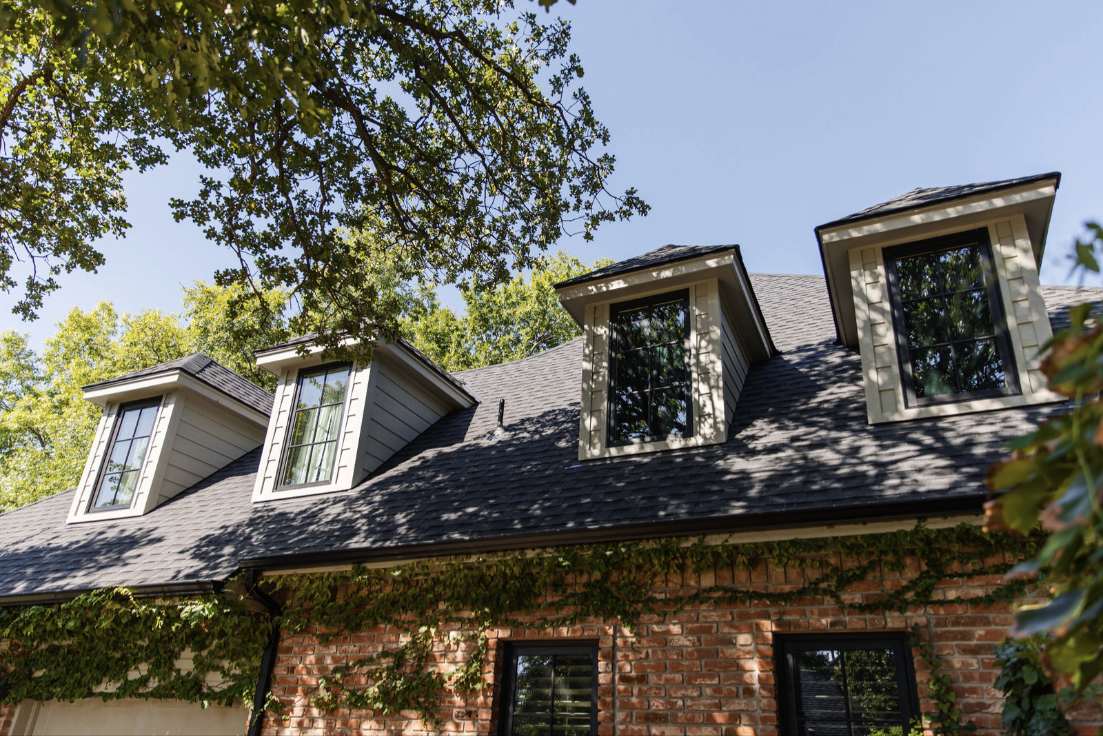
Close-up view of a brick home with a dark shingle roof, featuring three dormer windows and ivy climbing the exterior under a canopy of leafy trees.
Your roof is your home’s first line of defense against the elements. It protects you and your family from rain, wind, heat, and hail, all while helping maintain your home’s structural integrity and energy efficiency. But like anything exposed to constant weathering, a roof doesn’t last forever. What many homeowners don’t realize is that the signs of a failing roof can be subtle at first. Learning to spot these early warning signs can help you avoid more serious and expensive issues down the road.
The most obvious indicator that you need residential roof repair is a leak. If you notice water stains on your ceiling, walls, or even around light fixtures, it’s time to call a professional. Even a small, discolored spot could be the result of water slowly seeping through compromised shingles or flashing. Left untreated, a leak can cause damage to insulation, drywall, and even lead to mold or wood rot. A reliable roof leak repair near me service can quickly locate the problem area and make targeted repairs before the damage spreads.
But leaks aren’t the only signal that something’s wrong. Shingle damage is another red flag. If your shingles are curling, cracked, missing, or appear to be losing granules, it means your roof is no longer properly sealed. This leaves it vulnerable to rain and wind, especially during severe storms. Damaged shingles are often the result of aging materials or recent weather events, and they should be addressed immediately to prevent further degradation.
Other subtle yet significant signs of roof trouble include a sagging roofline, granules collecting in gutters, or unusually high energy bills. A sagging area could indicate structural damage or trapped moisture in the roof deck. Granule buildup in your gutters usually signals that your shingles are deteriorating faster than they should. And if your heating and cooling costs suddenly spike, it could be because of poor insulation performance, often tied to leaks or inadequate ventilation in the roof structure.
To avoid being caught off guard, schedule routine inspections of your roof. The best times are typically in the spring and fall, when weather is milder and issues from the previous season can be addressed. It’s also wise to schedule a checkup after any significant storm, especially if you suspect hail or high winds may have caused damage.
Proactive maintenance is the key to avoiding emergency repairs. A trustworthy roofing contractor will not only handle current problems but also look for areas that could lead to future issues. Addressing these early can save you thousands in repair costs and preserve the life of your roof.
If you’re seeing any of these signs, don’t wait. A quick call to a local residential roof repair expert could prevent much bigger problems later. Protect your investment and your peace of mind by staying ahead of roof damage before it escalates.