Every spring and summer, Oklahomans brace for the familiar sound of thunder, heavy winds, and yes, hail. While the storm may pass in a matter of minutes, the damage it causes can be difficult to identify and last for years. Unfortunately, so can the financial burden if you miss a critical deadline with your insurance company.
At Red River Roofing, Siding & Windows, we want to help you avoid costly surprises. Many homeowners are unaware that most insurance companies place a time limit on when you can file a claim for storm-related roof damage. That time frame is typically just one to two years after the storm occurs.
If you were hit by a hailstorm in 2022 or 2023 and haven’t filed a claim yet, now is the time to act.
Why Time Matters
Home insurance policies often contain specific language about how long you have to report storm damage. If you delay too long, your claim could be denied, even if the damage is legitimate. That means you would be responsible for the entire cost of repair or replacement, costs that can quickly climb into the thousands of dollars.
Many homeowners assume that if their roof isn’t leaking, everything is fine. But hail damage is often hidden at first. Over time, small impacts can turn into big problems. Shingles can lose their protective granules, become brittle, and fail when you need them most. The best thing you can do to rest easy after a severe storm is schedule a free consultation with a roofing expert.
What Does Old Hail Damage Look Like?
Hail damage is sneaky. It does not always leave behind large holes or obvious cracks. In fact, many homeowners don’t even realize their roof was damaged until months or even years later when leaks, drafts, or high energy bills start appearing.
When hail first hits, it can knock off the tiny granules that protect your shingles from the sun and water. Over time, those exposed areas begin to wear down faster than the rest of the roof. Eventually, the shingle surface weakens, letting in moisture and causing more damage underneath.
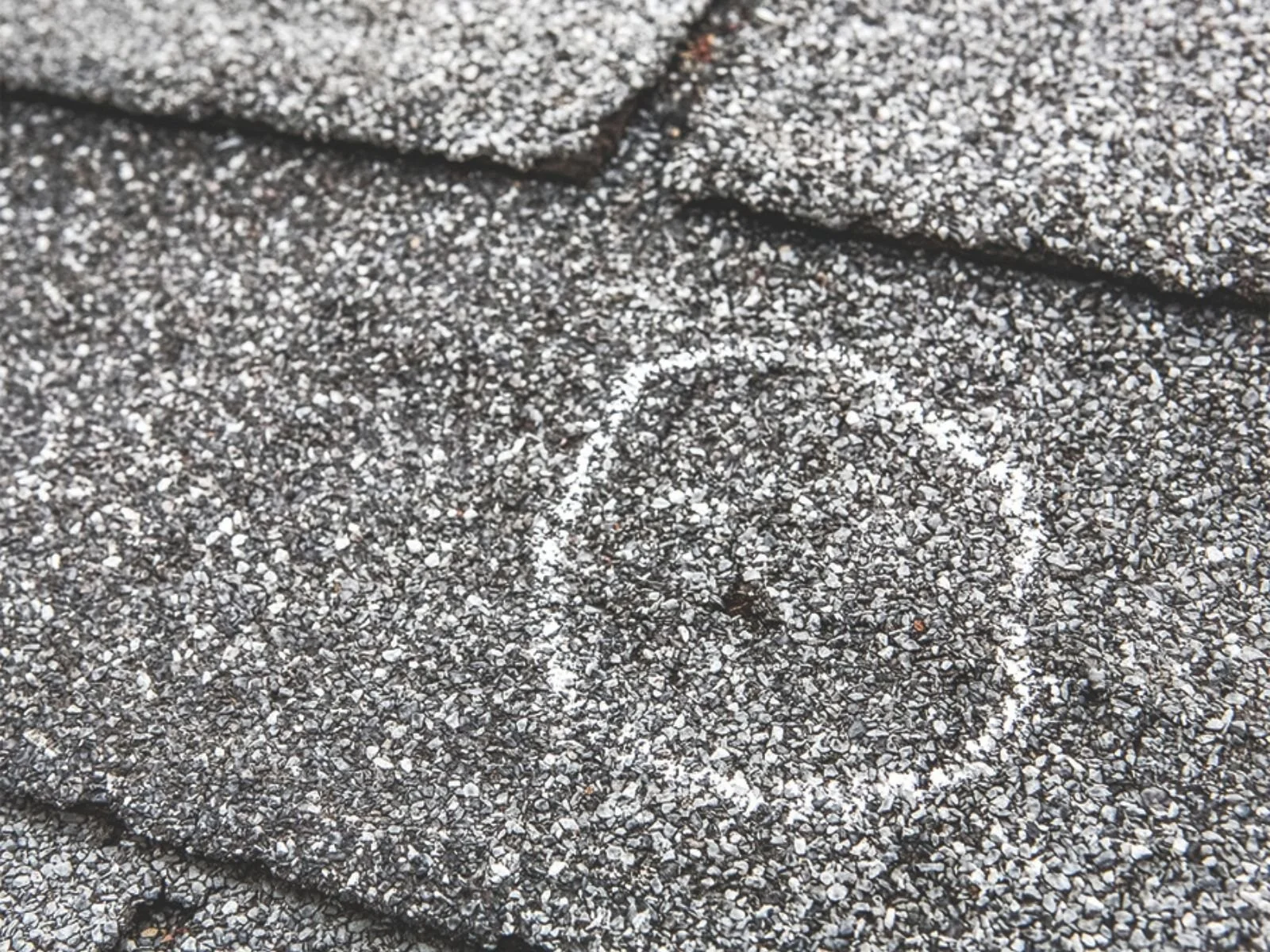

Here are a few specific signs of aging hail damage you can look for:
Dark spots or bruising on shingles: These are areas where the granules have been knocked off, exposing the softer asphalt underneath. It may feel spongy if you press on it.
Small, round dents in the shingles or flashing: Especially common with medium to large hail, these pockmarks may be hard to see unless the light hits just right.
Shingles that appear bald or discolored: As granules wear away, the shingle may start to look patchy or faded compared to surrounding areas.
Cracks or curling at the edges of shingles: As damage worsens over time, shingles can dry out, crack, or curl, opening up more entry points for water.
Loose granules in your gutters or at the base of downspouts: If you notice gritty, sand-like material in these areas, it could be coming from your shingles.
Most of this damage is not visible from the ground. And unless you're comfortable climbing on your roof, which we don’t recommend, it can be easy to miss. That’s why a professional inspection is so important. We know exactly what to look for, and we can spot even the early signs of storm damage that could turn into major repairs later.
What Should You Do Now?
Here is a simple three-step action plan you can follow today:
Review the date of the last major hailstorm in your area.
Schedule a free roof inspection.
Let us help you review your insurance policy.
Don’t Wait Until It’s Too Late
If you suspect your roof may have suffered hail damage, don’t take a wait-and-see approach. Every day you wait brings you closer to the end of your insurance claim window. Even if you’re unsure, a professional inspection gives you peace of mind and a clear plan forward.
Your roof is one of your home’s first lines of defense. Protect it, and your wallet, by getting ahead of the problem today.
Schedule your free inspection with us today and get the answers you need before your deadline slips by.