
A storm just came through Oklahoma City and you're looking at your roof wondering how bad it is. Maybe there's a stain on the ceiling that wasn't there yesterday. Maybe shingles are in the yard. Maybe everything looks fine from the ground but you heard something hit hard enough to make you nervous.
This guide covers what to check first, what counts as a real roofing emergency versus what can wait for a scheduled inspection, and what happens when Red River shows up.
What to Check After a Storm Passes
Stay off the roof. Wet shingles, loose materials, and hidden structural damage make it dangerous, and anything you can see from up there a professional can see more safely with the right equipment.
From the ground, walk the perimeter and look up. Missing shingles are the obvious sign, but also look for dents or dings in gutters and downspouts (a sign hail hit hard enough to damage the roof too), fallen tree limbs resting on or near the roofline, and pieces of flashing or vent caps on the ground.
Inside the house, check ceilings and walls for new water stains, especially in rooms directly below the roofline. Look in the attic if you can get to it safely. Wet insulation, daylight coming through the roof deck, or water dripping along rafters all mean water is getting in.
Document what you find with your phone. Photos of exterior damage, interior stains, and anything that landed in the yard. This documentation helps if you file an insurance claim later, and it helps your roofer understand what happened before they get on the roof.
When to Call for Emergency Roof Repair
Not every storm creates an emergency. Some damage can wait a few days for a scheduled inspection. Some cannot. The difference is whether water is getting in or the roof structure is compromised.
Call the same day if you're dealing with any of these:
An active leak. Water dripping through the ceiling or running down a wall means something above has failed and the damage will get worse with every rain until it's addressed.
A visible hole or puncture. A tree limb through the roof, a section of decking exposed, or a large area of missing shingles with underlayment or wood visible underneath.
Sagging or partial collapse. Any visible dip or sag in the roofline, or an area that feels soft when you press on the ceiling from inside, means the structural decking may be compromised. This is the most serious category and should not wait.
Flashing or vent caps torn away by wind. These are the seals around chimneys, skylights, and roof vents. When they're gone, water has a direct path into the house even in a light rain.
If the damage is cosmetic (a few dented or cracked shingles, granule loss in the gutters, minor dents in flashing that's still sealed), schedule an inspection within the next week or two rather than treating it as an emergency. That's still worth documenting and checking, but it's not a same-day call.
What to Do Before a Crew Arrives
If you've called for an emergency repair, there are a few things worth doing while you wait.
Move furniture, electronics, and anything valuable away from the area where water is coming in. Place a bucket or container to catch active drips. If you can safely reach the attic, pressing a piece of plywood against the wet spot from underneath can slow the flow until the crew gets there.
Do not climb onto the roof. Wet shingles, loose materials, and hidden structural damage make it dangerous even in dry weather. After a storm, it's worse.
If you haven't already, take photos and video of everything: the damage inside, the damage outside, and anything that landed in the yard. This documentation matters for insurance, and it gives your roofer a head start on understanding what happened before they arrive.
What Happens When Red River Shows Up
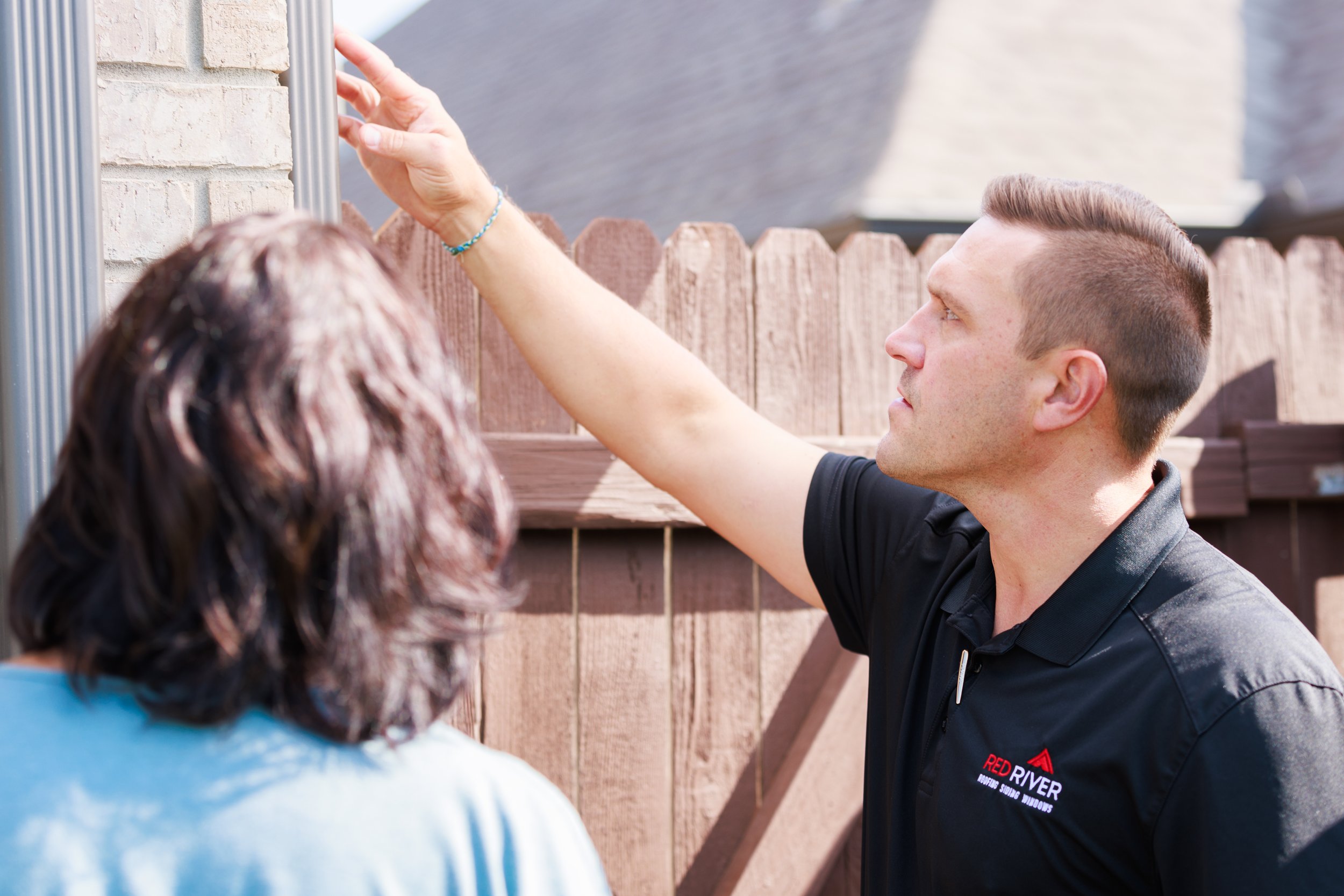
Red River runs a 360° Exterior Inspection on every storm-damage call. That means the crew doesn't look at the one spot you called about and leave. They walk the full roof, check the attic and ventilation, inspect flashing around every penetration, and photograph everything they find.
The output is a Home Treatment Plan: a written document that separates what needs emergency attention from what should be monitored and what can wait. Some storm-damage inspections result in a repair. Some result in a full replacement recommendation. Some result in a plan that says your roof held up and nothing needs to happen right now. The inspection tells the real story, and the Home Treatment Plan puts it in writing so the homeowner can make their own decision on their own timeline.
Dealing with Insurance After Storm Damage
If the damage is storm-related, your homeowners insurance may cover the repair or replacement. The process starts with documenting the damage (which the 360° Inspection handles), then filing a claim with your carrier, then having your adjuster inspect the property. Red River's insurance claims team works with homeowners through this process: documenting damage, meeting the adjuster on site, and reviewing the scope to make sure nothing was missed.
One thing worth knowing before you file: Oklahoma homeowner deductibles average around $7,000 and continue to climb. If the damage is minor and the repair cost is close to or below your deductible, filing a claim may cost you more in premium increases than paying for the repair out of pocket. Red River can help you weigh that decision. The Oklahoma Insurance Department has additional guidance on how the claims process works and what your policy is required to cover.
If you already have Class 4 impact-resistant shingles and your roof came through the storm without significant damage, that's the shingles doing exactly what they were designed to do. A post-storm inspection can confirm it, and you may not need to file a claim at all.
Watch Out for Storm Chasers
After every major storm in Oklahoma, contractors show up door to door offering free inspections, discounted repairs, or promises to cover your insurance deductible. Some are legitimate companies from out of state responding to a surge in demand. Many are not.
Covering a homeowner's insurance deductible has been illegal in Oklahoma since November 2022, and was considered insurance fraud before that. Any contractor who offers to "eat" or waive your deductible is either breaking the law or planning to cut corners somewhere else in the job to make up the difference.
Before signing anything with a contractor who showed up unsolicited after a storm, ask for their Oklahoma Construction Industries Board registration number, proof of general liability insurance, a physical local address, and their manufacturer certifications. A GAF Master Elite designation, for example, is held by fewer than 2% of roofing contractors nationwide and requires verified training, insurance, and installation standards. A storm chaser won't have it.
Red River has operated in Edmond since 1999. The office, the showroom, and the repair crews are all local. That's the difference between a company that will be here next year when you need a follow-up and one that won't.
Don't Wait for the Next Storm to Find Out
Small storm damage that goes unaddressed compounds. Granule loss from one hailstorm makes the shingle more vulnerable to the next one. A lifted piece of flashing that seems minor becomes a leak the next time it rains hard. A missing shingle exposes underlayment that was never designed to be a long-term weather barrier.
None of that means you need a new roof every time it hails. It means you need to know where things stand. An inspection after a storm is the fastest way to separate real damage from cosmetic wear, get it documented, and make a decision based on what's there rather than what you're worried might be there.
Frequently Asked Questions
How long after a storm should I get my roof inspected?
As soon as you can schedule it. If you have an active leak, visible holes, or sagging, call the same day. If the damage appears minor or cosmetic, schedule within the next week or two. The longer storm damage sits uninspected, the more opportunity moisture has to reach the decking and attic underneath.
What should I do if my roof is leaking right now?
Move belongings away from the leak. Place a bucket or container to catch the water. If you can safely reach the attic, a temporary patch from underneath (a piece of plywood pressed against the wet spot) can slow the flow until a crew arrives. Do not climb onto the roof yourself, especially if it's wet or if the storm is still passing. Call a professional for the same-day response.
Does Red River offer emergency roof repair in Edmond, Oklahoma City, and surrounding areas?
Yes. Red River serves the greater Oklahoma City metro, including Edmond, Norman, Moore, Broken Arrow, Stillwater, Guthrie, and surrounding communities. The company has operated in Edmond since 1999. Call or schedule an inspection online to get started.
Will my insurance cover storm damage roof repair?
Most standard homeowners policies cover sudden storm damage from wind, hail, or fallen debris. They typically do not cover damage from age, wear, or deferred maintenance. Whether to file depends on the extent of the damage relative to your deductible. Red River's insurance claims team can help you assess whether filing makes financial sense for your situation.
How do I know if I need a full replacement or just a repair?
That depends on the extent and location of the damage, the age of the roof, and the condition of the decking underneath. Isolated damage to a small area of an otherwise healthy roof is usually a repair. Widespread damage across multiple slopes, or damage on a roof that's already past most of its expected lifespan, often points toward replacement. The 360° Inspection and Home Treatment Plan are designed to give you that answer in writing, with photos, so you're not guessing.
What's the difference between emergency roof repair and a regular inspection?
An emergency repair addresses an active, urgent problem: a leak, a hole, exposed decking, or structural damage that can't wait. The goal is to stop water intrusion and stabilize the roof. A regular inspection is a scheduled evaluation of the roof's overall condition, done annually or after a storm where the damage isn't immediately obvious. Both start with the same 360° Exterior Inspection process.
Your Roof Just Took a Hit. Here's the Next Step.
If your home was in the path of a recent storm, or if you're not sure whether it was, a 360° Exterior Inspection is the fastest way to find out where things stand.
Red River has been inspecting and replacing Oklahoma roofs since 1999. Over 17,000 projects. The crew will document what's there, build a Home Treatment Plan, and give you a straight answer about what needs to happen now and what can wait.
If you're already weighing the cost of a potential replacement, here's our full breakdown of roof replacement costs in Oklahoma for 2026. And if you want to understand how long your current roof should last given Oklahoma's weather, read how long a roof lasts in Oklahoma.